


 English
 Español
 عربى
2024 Furniture Market Analysis: Reading Chairs and Tables Buyer Insights
2024 Furniture Market Analysis: Reading Chairs and Tables Buyer Insights
2024 Furniture Market Analysis: Reading Chairs and Tables Buyer Insights
2024 Furniture Market Analysis: Reading Chairs and Tables Buyer Insights
2024 Furniture Market Analysis: Reading Chairs and Tables Buyer Insights
2024 Furniture Market Analysis: Reading Chairs and Tables Buyer Insights
2024 Furniture Market Analysis: Reading Chairs and Tables Buyer Insights
2024 Furniture Market Analysis: Reading Chairs and Tables Buyer Insights
2024 Furniture Market Analysis: Reading Chairs and Tables Buyer Insights
2024 Furniture Market Analysis: Reading Chairs and Tables Buyer Insights
2024 Furniture Market Analysis: Reading Chairs and Tables Buyer Insights
2024 Furniture Market Analysis: Reading Chairs and Tables Buyer Insights
2024 Furniture Market Analysis: Reading Chairs and Tables Buyer Insights
2024 Furniture Market Analysis: Reading Chairs and Tables Buyer Insights
2024 Furniture Market Analysis: Reading Chairs and Tables Buyer Insights
2024 Furniture Market Analysis: Reading Chairs and Tables Buyer Insights

Product Category
NEW Category
Contact us
2024 Furniture Market Analysis: Reading Chairs and Tables Buyer Insights
Content
Every year we sit down with the order sheets, the sample-room notes and the freight quotes and try to work out what actually changed. Looking back at the 2024 furniture market analysis for reading chairs and tables, the picture is less dramatic than the headlines suggested, and more useful. Demand did not collapse; it shifted. Buyers became pickier about proportion, upholstery and how a chair actually behaves after two hours of use, and they asked harder questions about how a piece is packed, shipped and assembled.
This is our read of that year, written from the manufacturing side rather than the analyst's desk, with the details we think still matter when someone is choosing a reading chair or a companion table today.
The 2024 Market in Plain Numbers
One widely cited estimate put the global furniture market at close to USD 549 billion in 2024. The more interesting story sits underneath that figure: growth continued, but at a steadier, less exuberant pace than the post-pandemic years, and the gap between well-run suppliers and the rest widened noticeably. Retailers that had over-ordered in 2022 and 2023 spent much of 2024 clearing stock, which pushed factories toward smaller, more frequent production runs and much more careful forecasting.
Seating remained the largest product segment in most published breakdowns, ahead of beds, storage and tables. Reading chairs do not appear as their own line in these reports, which is exactly why they are easy to misread. In practice the category is assembled from accent chairs, lounge chairs, home office chairs and the lighter end of the dining chair range. When buyers talk about a reading chair, they are usually describing a role rather than a product code: a seat that holds someone comfortably for an hour or more, in a corner, beside a window, next to a table small enough to reach without standing up.
Reading Chairs: Comfort Is Still the Product
What Buyers Asked For
The 2024 order sheets were unusually specific. Seat depth mattered more than overall footprint. So did lumbar shaping, a backrest that stopped at shoulder height rather than mid-neck, and arms low enough to let a book rest on the lap. Several of our long-standing customers moved away from deep, enveloping club shapes toward slimmer profiles, because the same chair had to work in a home office on Monday and in a hotel reading corner on Friday.
Adjustability started to appear in places it did not used to. Swivel bases, locking tilt mechanisms and height-adjustable arms, once confined to task chairs, turned up in residential leisure models. On the factory floor this is a mixed blessing: more moving parts means more testing, but it also means one frame can serve several markets.
Materials That Earned Their Place
Textured weaves had a strong year. Bouclé, linen-look polyesters and matte performance fabrics outsold smooth finishes in residential programs, while synthetic leather held its ground wherever cleaning schedules are non-negotiable. Solid wood legs, powder-coated steel frames and knockdown construction quietly became the default rather than the upgrade. Fewer buyers asked whether a chair was flat-packed; they assumed it would be, and asked instead how well the joints held up after repeated assembly. That single question tells you a lot about how the market matured in 2024.
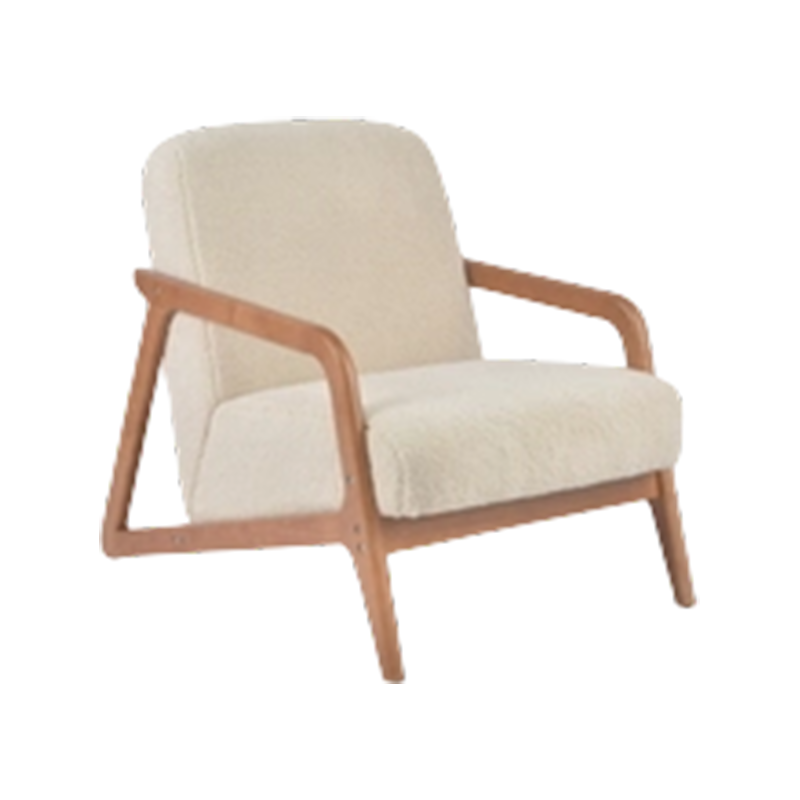 Mid-Century Modern Bouclé Lounge Chair with Solid Wood FrameA sculptural lounge chair pairing textured bouclé upholstery with a walnut-finished solid wood frame, suited to buyers prioritizing tactile fabrics and warm wood tones.View Product →
Tables: The Quiet Half of the Pairing
Tables rarely get the attention chairs do, but in 2024 the pairing became a purchasing decision in its own right. Buyers stopped specifying a chair and a table separately and started asking for a matched set of heights, finishes and edge profiles. Small round and nesting tables performed well in apartments and hospitality rooms where floor space is negotiated centimetre by centimetre. Square side tables with a lower shelf did well wherever a lamp had to share the surface with a cup.
The practical constraint is geometry. A chair with a seat height of 44 cm and a generous armrest will not slide comfortably under a 55 cm table, no matter how good the fabric looks. We keep a simple reference sheet for this, and it is worth sharing.
| Setting | Typical seat height | Comfortable table height | What to watch |
|---|---|---|---|
| Reading corner | 40–45 cm | 55–65 cm side table | Armrest clearance |
| Home office nook | 45–50 cm | 70–75 cm desk | Knee clearance |
| Lounge or hotel room | 38–42 cm | 50–55 cm low table | Easy-clean upholstery |
| Small apartment | 44–48 cm | 60 cm nesting table | Footprint and swivel radius |
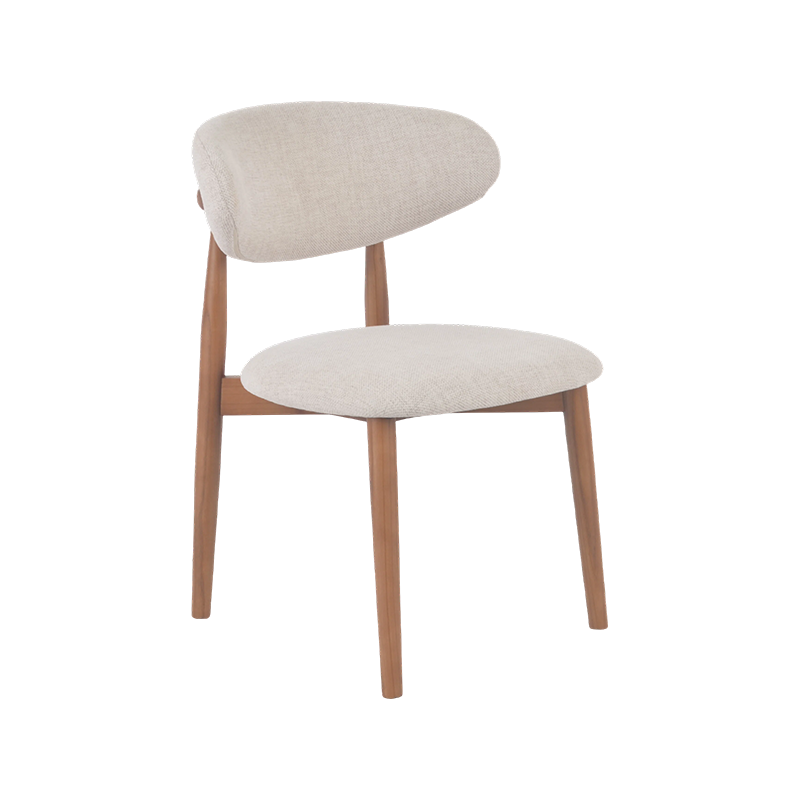 Sculptural Mid-Century Wood Dining Chair with Kidney BackrestAn asymmetrical kidney-shaped backrest and tapered walnut-painted legs give this upholstered dining chair a distinctive profile for coordinated table settings.View Product →
Five Trends That Shaped 2024 Buying Decisions
- Multifunctional seating. A chair had to serve reading, working and occasional dining without looking like it belonged to any single one of them.
- Neutral, tactile upholstery. Greys, warm off-whites and muted greens dominated, with texture replacing pattern as the way to add interest.
- Knockdown logistics as standard. Flat-packed frames reduced container cost per unit and made mixed pallets far easier to build.
- Ergonomics beyond the office. Lumbar support and tilt tension moved into residential and hospitality specifications.
- Green manufacturing credentials. Buyers asked for evidence of process control and material compliance, not just a certificate on a website.
Regional Demand and the Manufacturing Side
Asia Pacific remained the workshop of the category, with Europe and North America supplying most of the specification-led demand and the Middle East driving hospitality and commercial seating volumes. That split shapes how a factory organises itself. Residential orders want variety and smaller minimums; hospitality orders want consistency and repeatability across hundreds of identical units.
Our own experience tracks this closely. Zhejiang Haoguo Furniture has been building seating since 2007, and the company now operates a 68,000 square metre site with roughly 63,000 square metres of built floor space, more than 260 employees including a technical team of over 20, 68 registered product patents and an annual capacity of about two million units, exported to more than 40 countries. That capacity is only useful if it can flex between a 60-piece boutique order and a hotel programme, which is the part of the business most buyers never see. If you want a closer look at how the lines are laid out, the factory overview walks through the process from frame welding to final packing.
What Buyers Should Look For Now
- Seat depth and back angle checked with a real cushion, not a bare frame sample.
- Arm height relative to the table you intend to pair with the chair.
- Fabric rub counts and cleaning instructions stated in writing.
- Joint construction on knockdown models, especially where legs meet the seat box.
- Spare-part availability, because a reading chair that loses a glide should not become waste.
For buyers assembling a mixed range, a swivel accent chair is often the most efficient single addition: it can face a table, a window or a conversation group without being moved, which is precisely the flexibility smaller rooms demand.
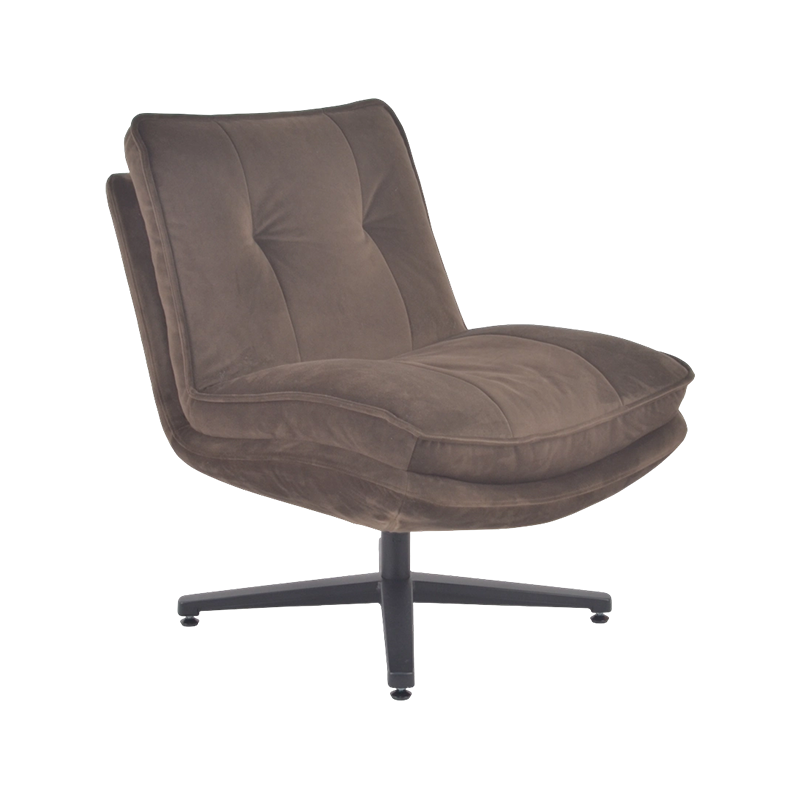 Modern High-Pile Velvet Swivel Accent ChairA curved velvet accent chair with 360-degree swivel and four-star metal base, adding flexible seating that can turn between table, window or conversation group.View Product →
Supply Chain Considerations and Outlook
Raw material pricing was the recurring headache of 2024. Foam, steel and freight rates all moved enough to break carefully built margin assumptions, and the suppliers who coped best were the ones that quoted in shorter windows and held firmer on specification rather than quietly substituting materials. Knockdown design deserves credit here as well: packing frames and seats separately cut container volume meaningfully, which softened the impact of higher freight costs.
Looking forward from that baseline, we expect the reading chair and table category to keep drifting toward fewer, better-specified models. The buyers who did well in 2024 were not the ones who chased the lowest quote; they were the ones who locked a design, tested it properly and reordered it. That is a less exciting story than a market forecast, but it is the one that shows up in the profit column. If you would like the longer version of how we work with buyers on specification and sampling, the company profile is a reasonable place to start.
A final observation from the sample room. The chairs that survived the year were rarely the most dramatic ones. They were the ones where the seat height, the arm position and the fabric all agreed with each other, and where the table beside them asked nothing of the person sitting down. Get those relationships right and the market analysis stops being a set of numbers and starts being a product people keep.
PREV:No previous article
NEXT:Anatomy of a Sofa: Frame, Suspension, Cushions, and Hidden Parts Explained
NEXT:Anatomy of a Sofa: Frame, Suspension, Cushions, and Hidden Parts Explained
Featured Products
Explore Our Featured Products



Featured News

- Mobile
- Contact Us
-
-
+86-139 0582 1355

-
alan@haoguofurniture.com

-
Approximately 210 meters south of the intersection of Le San Road and Sanwanqiao Road in Anji County, Huzhou City, Zhejiang Province, China

-
Copyright ©
Zhejiang HAOGUO Furniture Co., Ltd.
Rights Reserved.
 Office Chair Manufacturers
Dining Chair Manufacturers
