


 English
 Español
 عربى
Ashley Furniture News: What Recent Headlines Mean for Office Furniture Buyers
Ashley Furniture News: What Recent Headlines Mean for Office Furniture Buyers
Ashley Furniture News: What Recent Headlines Mean for Office Furniture Buyers
Ashley Furniture News: What Recent Headlines Mean for Office Furniture Buyers
Ashley Furniture News: What Recent Headlines Mean for Office Furniture Buyers
Ashley Furniture News: What Recent Headlines Mean for Office Furniture Buyers
Ashley Furniture News: What Recent Headlines Mean for Office Furniture Buyers
Ashley Furniture News: What Recent Headlines Mean for Office Furniture Buyers
Ashley Furniture News: What Recent Headlines Mean for Office Furniture Buyers
Ashley Furniture News: What Recent Headlines Mean for Office Furniture Buyers
Ashley Furniture News: What Recent Headlines Mean for Office Furniture Buyers
Ashley Furniture News: What Recent Headlines Mean for Office Furniture Buyers
Ashley Furniture News: What Recent Headlines Mean for Office Furniture Buyers
Ashley Furniture News: What Recent Headlines Mean for Office Furniture Buyers
Ashley Furniture News: What Recent Headlines Mean for Office Furniture Buyers
Ashley Furniture News: What Recent Headlines Mean for Office Furniture Buyers

Product Category
NEW Category
Contact us
Ashley Furniture News: What Recent Headlines Mean for Office Furniture Buyers
Content
- 1 The Recent Headlines, Grouped by What They Signal
- 2 What a Consolidation Story Really Means
- 3 The Upscale Push Is Really a Materials Story
- 4 A Short Checklist for Office and Contract Seating
- 5 Contract and Hospitality Buyers Ask Different Questions
- 6 Where a Manufacturer Like Us Fits In
- 7 Three Questions We Are Hearing This Quarter
Every few weeks, a customer forwards us a headline about Ashley Furniture and asks some version of the same question: does this change anything for my order? It is a fair question. The company is one of the largest furniture makers in the world, and its news — store openings, factory consolidations, innovation awards, charity milestones — tends to ripple outward through retail, importing and contract furnishing. We read those stories too, not to copy anyone's playbook, but because they trace where materials, capacity and pricing are heading next.
What follows is a plain-language reading of the recent news cycle: what actually happened, what each theme usually signals for trade buyers, and how we think about it here at HAOGUO when we quote a project or set up a production run.
The Recent Headlines, Grouped by What They Signal
Strip away the press-release polish and the past few months of coverage fall into five fairly clear buckets: retail expansion, manufacturing consolidation, innovation recognition, a push toward higher-end product, and community work. Each one speaks to a different part of the supply chain, and each one has a practical implication for anyone sourcing seating or case goods.
| Theme in the news | Representative example | What it usually signals |
|---|---|---|
| Retail expansion | New branded stores in Laos, Mongolia, Colombia, Brunei, Malaysia and the Philippines | Dealer networks are widening in emerging markets, which raises demand for local delivery, assembly and after-sales support |
| Manufacturing consolidation | Mesquite, Texas plant consolidated, with 266 roles affected by May 2026 | Capacity is being rebalanced rather than abandoned; origin mix and lead times may shift between quarters |
| Innovation recognition | Innovation honors from a regional manufacturing award program and a "most innovative company" listing | Process automation and standardized construction keep spreading across the sector, including knock-down packing |
| Move upscale | Premium lines produced through existing domestic and imported supply chains | Better upholstery, mixed materials and refined finishes are reaching mid-market price points |
| Community programs | A bed-donation milestone of 200,000 units, plus arts and scholarship initiatives | Social-impact documentation is becoming a routine question in retailer and contract tenders |
Read together, the pattern is not dramatic. It is a very large, vertically integrated manufacturer doing what mature manufacturers do: opening stores where demand is growing, trimming capacity where it is not, and buying itself room at the upper end of the market. That is a familiar rhythm for anyone who has spent time in a furniture plant.
What a Consolidation Story Really Means
The item that generated the most trade chatter was the consolidation of the Texas facility. Headlines frame that kind of announcement as decline. From the factory floor, it usually looks more like rebalancing: capacity moves to other plants, the SKU list gets shorter, and the products that survive tend to be the ones that ship and assemble efficiently.
For buyers, that translates into three practical habits:
- Confirm the country of origin and the production site for each item before you commit to a program, not after.
- Ask for a written lead time with a buffer, because capacity shifts during a consolidation year are rarely smooth.
- Dual-source anything that carries a deadline — seating for an office fit-out, chairs for a restaurant opening — rather than relying on a single line.
None of that is exotic advice. It is simply the discipline that separates buyers who get caught out by a supply shock from those who read the trade press early and plan around it.
The Upscale Push Is Really a Materials Story
Another thread worth following is the move toward higher-end product, produced through existing domestic and imported supply chains rather than through a separate luxury operation. When a mass manufacturer starts talking about premium tiers, the effect usually shows up first in upholstery: denser foams, softer cover fabrics, better leather splits, more careful stitching, and finishes that no longer look flat under showroom light.
That is good news for anyone specifying executive seating. Mid-market budgets now reach materials that were previously reserved for top-tier lines, provided the buyer knows what to ask about. On the leather side, the difference between a coated split and a breathable synthetic leather is invisible in a photo and very visible after eighteen months of daily use.
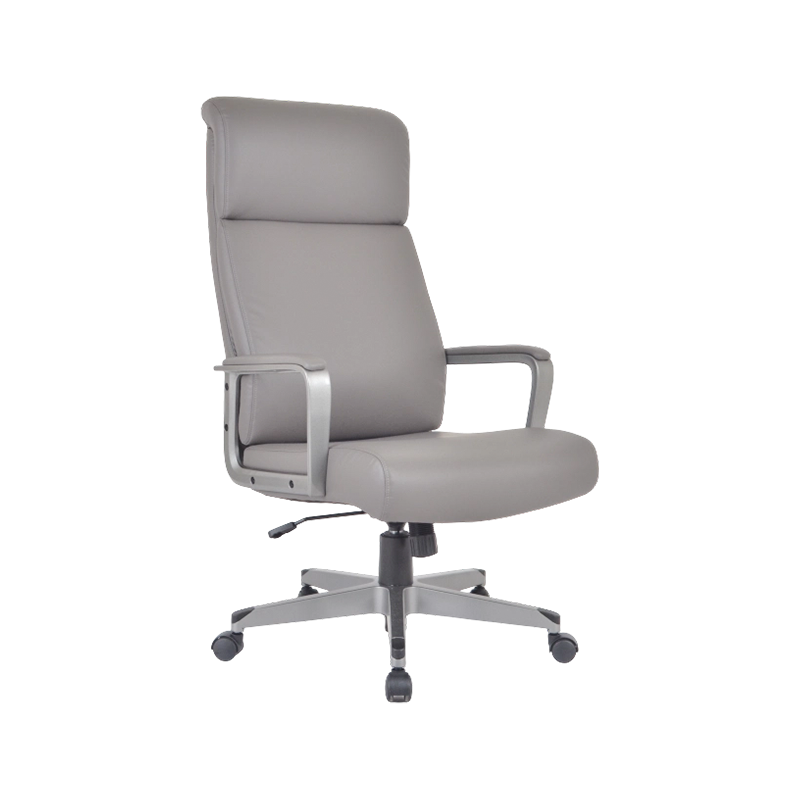 Model 7997 High Back PU Leather Office ChairA cost-effective executive chair with breathable PU, double-layer back support, high-density foam and an upright-lock seat plate for shared-office seating.View Product →
Our own approach to that tier is fairly plain: a high back, a mechanism that locks in more than one position, and a base that can be re-tightened rather than replaced. When a customer asks whether a chair will survive five years in a shared office, the answer usually lies in the mechanism and the foam density long before it lies in the cover material.
A Short Checklist for Office and Contract Seating
If the current news cycle tells us anything, it is that supply chains adjust faster than procurement calendars. A short checklist helps you buy well regardless of which headline is circulating this month:
- Test the tilt mechanism and arm adjustment yourself, or request a video of the actual production unit.
- Ask for foam density and fabric rub-count figures in writing.
- Check whether the item ships knock-down, and how much assembly is required on site.
- Confirm that spare parts — castors, gas lifts, arm pads — will be available for the life of the program.
- Match the chair to the real task: eight-hour desk work, hot-desking, or occasional meeting-room use.
We wrote a longer guide on this a while back, covering seat depth, lumbar support and the trade-offs between mesh and fabric backs, which may be useful if you are choosing a home office chair for a remote team.
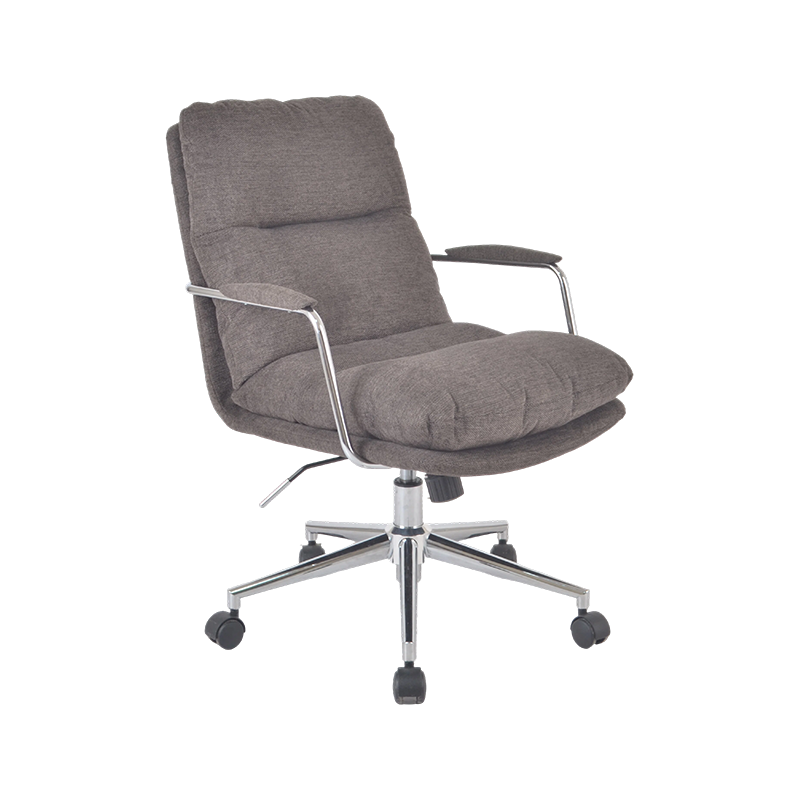
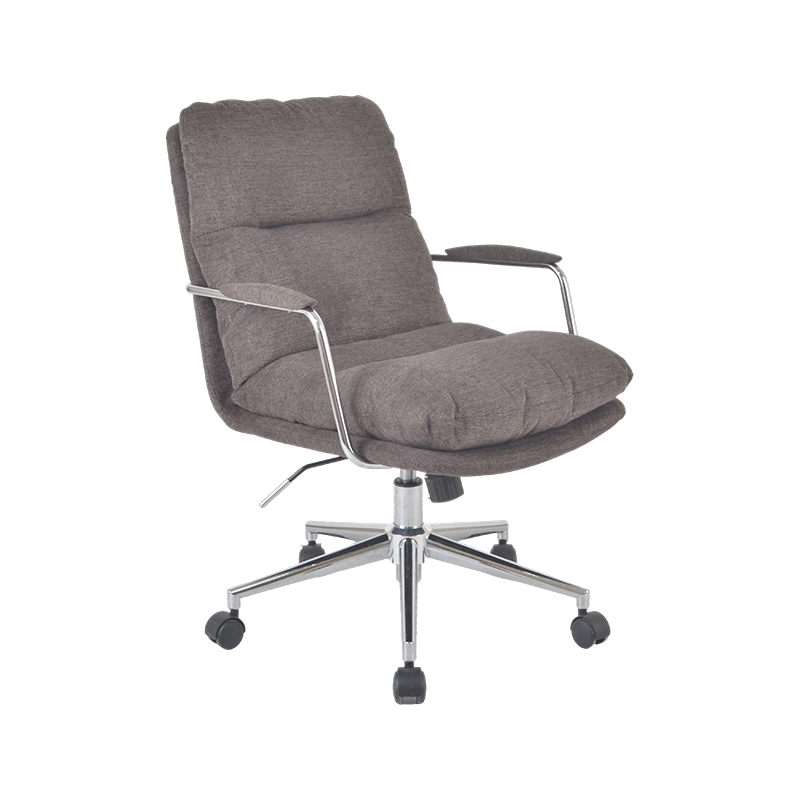 Custom High-Back Ergonomic Fabric Office ChairA breathable fabric-backed ergonomic chair with segmented lumbar support, chrome frame and tilt-lock mechanism, suited to home-office and study use.View Product →
Fabric-backed ergonomic chairs remain our steadiest sellers for exactly the reasons above: they breathe, they photograph honestly, and the covers can be cleaned instead of replaced.
Contract and Hospitality Buyers Ask Different Questions
Retail news gets the attention, but the contract side is where supply discipline shows. Hotels, co-working operators and restaurant groups rarely ask which brand is trending; they ask about packing density, replacement-part logistics and whether the twentieth chair in a batch will match the first.
That is why modular seating has become such a practical answer for commercial spaces. A sofa built from repeatable modules can be reconfigured when a lobby layout changes, and a damaged unit can be swapped rather than written off. Compressible and knock-down construction also keeps container volumes sane, which matters more than most spec sheets admit.
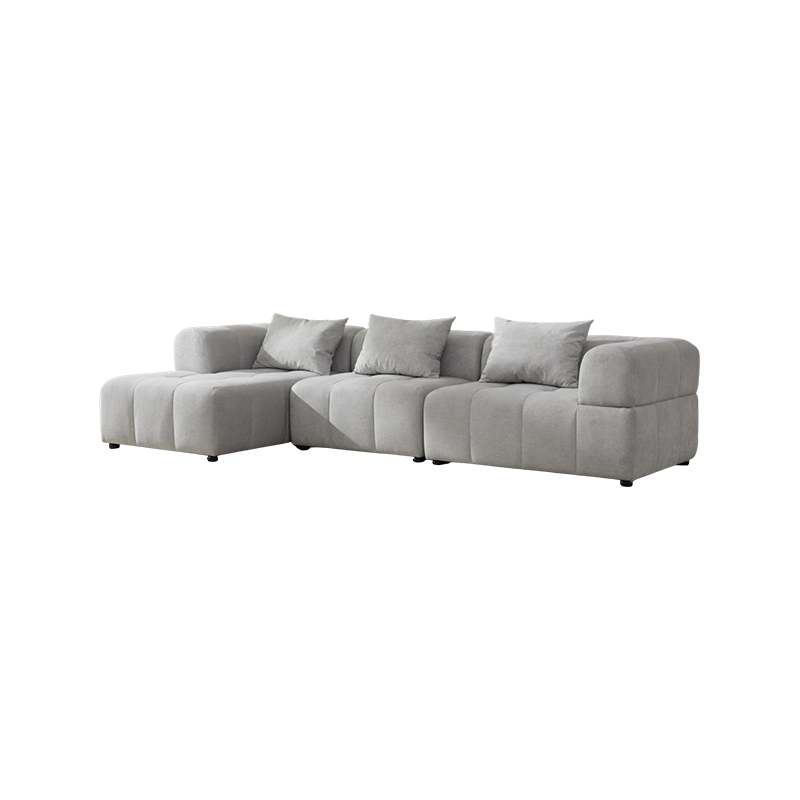 CENTAURI Modular Sofa for Flexible Living SpacesA configurable modular sofa with wear-resistant polyester upholstery, high-density foam and solid wood frame, available as single, double or L-shaped chaise.View Product →
When we quote commercial projects, we usually start from the room rather than the catalogue: how the space is entered, where people actually sit, and which parts will take the most wear.
Where a Manufacturer Like Us Fits In
HAOGUO has been building office furniture in Zhejiang since 2007, and we have watched several of these cycles pass through our own order book. Our plant covers 68,000 square metres, employs more than 260 people, and runs to roughly two million units a year across office chairs, sofas, leisure chairs and dining chairs. We hold 68 product patents, and most of our seating is designed knock-down and adjustable, which is less glamorous than an innovation award but considerably more useful when a container has to be packed efficiently.
We export to more than 40 countries, and the questions we field have changed over the past two years: more requests for material documentation, more interest in repairability, fewer buyers willing to accept a single source for a critical line. If you would like to see how the production side actually runs, our factory overview covers the lines, the testing and the packing process.
Three Questions We Are Hearing This Quarter
Is the current consolidation wave a reason to delay orders?
No, but it is a reason to confirm lead times in writing and to keep a second approved source for fast-moving items. Delay usually costs more than careful planning.
Closer than they were. Denser foams and better synthetic leathers have moved down the price ladder, while genuine top-grain leather has not. Be specific about which one you are buying.
What should a first-time importer ask for?
Three things: a sample of the exact production unit, a written specification sheet, and clarity on who handles spare parts after delivery. Everything else can be negotiated later.
PREV:furniture foam market: Applications, Selection Criteria, and Practical Guidance
NEXT:2024 Furniture Market Analysis: Reading Chairs and Tables Buyer Insights
NEXT:2024 Furniture Market Analysis: Reading Chairs and Tables Buyer Insights
Featured Products
Explore Our Featured Products

Featured News

- Mobile
- Contact Us
-
-
+86-139 0582 1355

-
alan@haoguofurniture.com

-
Approximately 210 meters south of the intersection of Le San Road and Sanwanqiao Road in Anji County, Huzhou City, Zhejiang Province, China

-
Copyright ©
Zhejiang HAOGUO Furniture Co., Ltd.
Rights Reserved.
 Office Chair Manufacturers
Dining Chair Manufacturers
