


 English
  Español
  عربى
عربى
What Makes a Striped Armchair with Turned Legs Work in Any Room?
What Makes a Striped Armchair with Turned Legs Work in Any Room?
What Makes a Striped Armchair with Turned Legs Work in Any Room?
What Makes a Striped Armchair with Turned Legs Work in Any Room?
What Makes a Striped Armchair with Turned Legs Work in Any Room?
What Makes a Striped Armchair with Turned Legs Work in Any Room?
What Makes a Striped Armchair with Turned Legs Work in Any Room?
What Makes a Striped Armchair with Turned Legs Work in Any Room?
What Makes a Striped Armchair with Turned Legs Work in Any Room?
What Makes a Striped Armchair with Turned Legs Work in Any Room?
What Makes a Striped Armchair with Turned Legs Work in Any Room?
What Makes a Striped Armchair with Turned Legs Work in Any Room?
What Makes a Striped Armchair with Turned Legs Work in Any Room?
What Makes a Striped Armchair with Turned Legs Work in Any Room?
What Makes a Striped Armchair with Turned Legs Work in Any Room?
What Makes a Striped Armchair with Turned Legs Work in Any Room?

Product Category
NEW Category
Contact us
What Makes a Striped Armchair with Turned Legs Work in Any Room?
Content
Why the Striped Armchair Remains a Design Staple
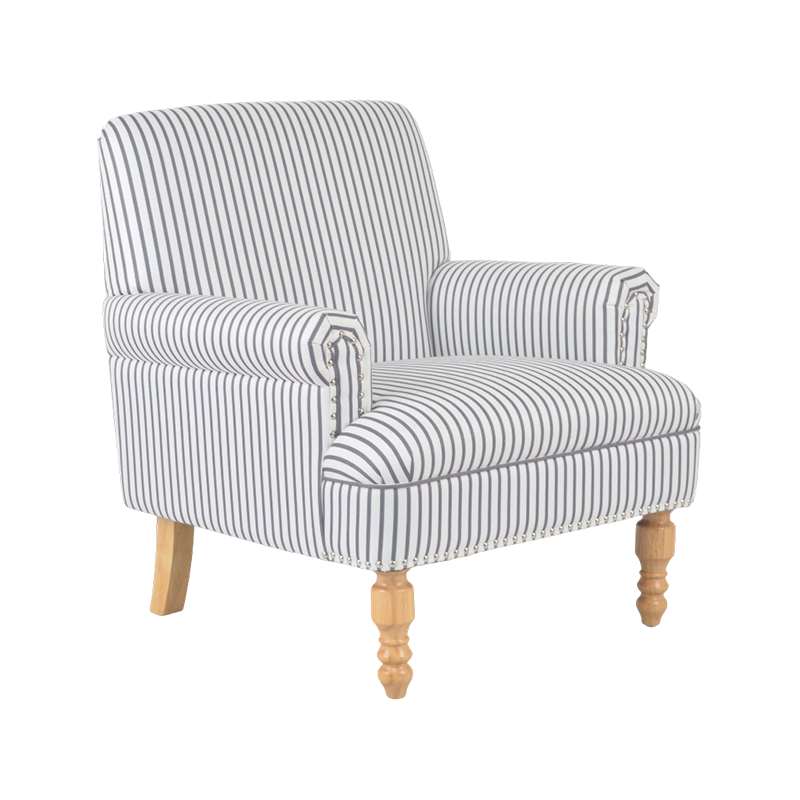
A classic striped upholstered armchair with turned legs has held its place in interior design for generations, and it isn't by accident. The vertical stripe pattern does more than decorate the fabric—it visually stretches the silhouette of the chair, making it appear taller and more elegant than a solid-colored counterpart of the same size. Paired with turned wood legs, a construction technique where a craftsman shapes wood on a lathe into rounded, ridged, or spindle-like forms, the chair gains a sense of heritage and handmade quality that mass-produced furniture often lacks. This combination of pattern and craftsmanship is why the piece continues to appear in Coastal cottages, French Country farmhouses, and Traditional living rooms alike.
Understanding why this design works helps homeowners make smarter choices when shopping for one, rather than simply picking the first striped chair they see. The stripe width, the leg finish, the arm shape, and the fabric weave all interact to create a specific mood, and small differences in these details can shift a chair from looking crisp and nautical to soft and vintage.
Reading the Design Details Before You Buy
Before purchasing, it helps to slow down and actually study the construction of the chair rather than judging it from a thumbnail photo. A few details separate a well-made striped armchair from a flimsy imitation.
Fabric Weight and Weave
Cotton and linen blends are the most common choices for this style because they hold a crisp stripe line without excessive shine. Look for a tightly woven fabric with a weight that feels substantial to the touch. Thin, loosely woven fabric will sag at the seat and pucker at the seams within a year of regular use, especially in high-traffic rooms.
Leg Construction
Turned legs should be solid wood, not a wood veneer over particleboard. Solid wood legs can be sanded and refinished over time, while veneer chips and cannot be repaired. Run a hand along the leg to feel for consistent, symmetrical ridges, which indicate the wood was properly turned on a lathe rather than molded from a composite material.
Arm and Cushion Support
Rolled or rounded arms should feel firm, not hollow, when pressed. A quality seat cushion uses high-density foam wrapped in down or a down-alternative fiber, which allows the cushion to compress under weight and then spring back rather than staying flattened.
Matching the Chair to Your Interior Style
One of the strongest selling points of this armchair is its versatility across several established design styles. The table below breaks down how the same chair can be styled differently depending on the room's overall aesthetic.
| Interior Style | Complementary Elements | Stripe Tone |
| Coastal | Rope accents, driftwood tones, sheer curtains | Navy on white |
| French Country | Distressed wood, floral textiles, wrought iron | Soft taupe on cream |
| Traditional | Dark wood tables, brass hardware, patterned rugs | Charcoal on ivory |
| Transitional | Mixed metals, simple lines, neutral palettes | Gray on white |
Because the stripe pattern is neutral by nature, changing the accent pieces around the chair is usually enough to shift its personality without replacing the chair itself.
Where to Place the Chair for Maximum Impact
Placement affects how much visual weight the striped armchair carries in a room. Because the vertical lines draw the eye upward, this chair works particularly well in spaces where you want to create a sense of height or focal interest.
- Position it near a window to take advantage of natural light highlighting the stripe contrast
- Use it as an anchor chair paired with a small side table in a reading nook
- Place a pair of them facing each other in a living room to create a conversational seating area
- Add it to a bedroom corner as a quiet spot for dressing or relaxing
- Avoid placing it directly under low, angled ceilings where the height-enhancing effect competes with the roofline
Caring for the Upholstery and Wood Legs
Longevity depends heavily on maintenance. Striped cotton and linen blends are prone to sun fading, so rotating the chair's position seasonally or using UV-filtering window film helps preserve the contrast between the stripe colors. Vacuum the upholstery weekly using a soft brush attachment to prevent dust from settling into the weave, and address spills immediately with a clean, dry cloth rather than rubbing, which can push liquid deeper into the fibers.
The turned wood legs need occasional attention as well. Dust them with a dry microfiber cloth, and apply a small amount of wood polish or conditioning oil every few months to prevent the wood from drying out and cracking, particularly in homes with forced-air heating that reduces indoor humidity in winter.
Final Thoughts on Choosing This Timeless Chair
A classic striped upholstered armchair with turned legs offers a rare combination of visual versatility and structural durability, provided the fabric weave, leg material, and cushion quality are all up to standard. By paying attention to these construction details and thinking carefully about placement and care, this chair can serve as a functional, comfortable, and stylish addition to nearly any home for many years to come.
PREV:What Should You Know Before Sourcing Accent Chairs for Your Space?
NEXT:How Do You Choose the Perfect Loveseat Sofa for Comfort and Style?
NEXT:How Do You Choose the Perfect Loveseat Sofa for Comfort and Style?
Featured Products
Explore Our Featured Products

Featured News

- Mobile
- Contact Us
-
-
+86-139 0582 1355

-
alan@haoguofurniture.com

-
Approximately 210 meters south of the intersection of Le San Road and Sanwanqiao Road in Anji County, Huzhou City, Zhejiang Province, China

-
Copyright ©
Zhejiang HAOGUO Furniture Co., Ltd.
Rights Reserved.
 Office Chair Manufacturers
Dining Chair Manufacturers
Office Chair Manufacturers
Dining Chair Manufacturers
