


 English
  Español
  عربى
عربى
Why Is a Modular Seat Sofa the Smartest Seating Investment for a Modern Home?
Why Is a Modular Seat Sofa the Smartest Seating Investment for a Modern Home?
Why Is a Modular Seat Sofa the Smartest Seating Investment for a Modern Home?
Why Is a Modular Seat Sofa the Smartest Seating Investment for a Modern Home?
Why Is a Modular Seat Sofa the Smartest Seating Investment for a Modern Home?
Why Is a Modular Seat Sofa the Smartest Seating Investment for a Modern Home?
Why Is a Modular Seat Sofa the Smartest Seating Investment for a Modern Home?
Why Is a Modular Seat Sofa the Smartest Seating Investment for a Modern Home?
Why Is a Modular Seat Sofa the Smartest Seating Investment for a Modern Home?
Why Is a Modular Seat Sofa the Smartest Seating Investment for a Modern Home?
Why Is a Modular Seat Sofa the Smartest Seating Investment for a Modern Home?
Why Is a Modular Seat Sofa the Smartest Seating Investment for a Modern Home?
Why Is a Modular Seat Sofa the Smartest Seating Investment for a Modern Home?
Why Is a Modular Seat Sofa the Smartest Seating Investment for a Modern Home?
Why Is a Modular Seat Sofa the Smartest Seating Investment for a Modern Home?
Why Is a Modular Seat Sofa the Smartest Seating Investment for a Modern Home?

Product Category
NEW Category
Contact us
Why Is a Modular Seat Sofa the Smartest Seating Investment for a Modern Home?
Content
- 1 What Makes a Modular Seat Sofa Different from a Traditional Sofa
- 2 How the Module Connection System Keeps the Configuration Stable
- 3 Frame and Cushion Construction: The Foundation of Long-Term Comfort
- 4 Fabric Upholstery Options and Interior Design Compatibility
- 5 Configuration Options: From Compact to Expansive Arrangements
- 6 Why Modular Sofas Are Particularly Well-Suited to Urban Apartment Living
- 7 Practical Considerations for Buyers and Importers Evaluating Modular Sofas
What Makes a Modular Seat Sofa Different from a Traditional Sofa
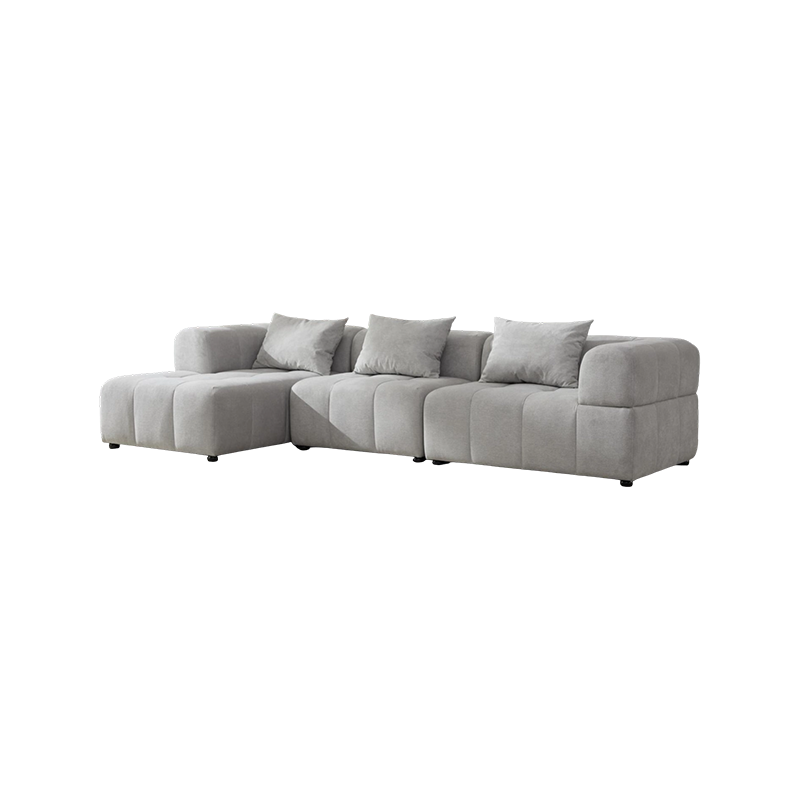
A modular seat sofa is built around a fundamentally different philosophy than a conventional fixed sofa. Where a traditional sofa arrives as a single, immovable unit in a predetermined shape and size, a modular seat sofa is composed of independently functional seating units — individual modules — that can be combined, rearranged, expanded, or reduced according to the needs of the space and the household. Each module is a structurally complete seat in its own right, with its own frame, cushioning, and upholstery, and when connected to adjacent modules the result is a unified sofa configuration that looks and functions as a coherent whole rather than a collection of separate pieces.
This distinction is practical and significant for anyone furnishing a home where space, budget, or lifestyle are subject to change. A household moving from a large apartment to a smaller one does not need to replace its sofa — it simply removes modules to fit the new room. A growing family that needs more seating can add units rather than replacing the entire piece. A home office that occasionally doubles as a guest room can be reconfigured around the sofa's position without purchasing new furniture. The modular seat sofa is, in essence, furniture that evolves with the people who use it rather than constraining them to a fixed arrangement made at the time of purchase.
How the Module Connection System Keeps the Configuration Stable
One of the practical concerns people raise about modular sofas is whether the individual units stay in position during daily use — sitting down heavily, children jumping, shifting position repeatedly, or moving the sofa across the room. This concern is legitimate, because a modular sofa that allows its units to drift apart, create gaps, or misalign visually is frustrating to use and quickly loses its appeal. The answer lies in the connection mechanism used to secure adjacent modules to each other.
Haoguo's modular sofas use securing clips integrated into the frame structure of each module. These clips engage between adjacent units at the connection points, locking the modules together so that the assembled configuration behaves as a single rigid unit rather than a loose arrangement of independent pieces. The clips prevent lateral drift — the gradual spreading apart of modules during use — and eliminate the gap formation that is the most visible quality failure in poorly designed modular seating. When the configuration is assembled correctly, the joint lines between modules are tight and consistent, and the overall silhouette of the sofa reads as cleanly as any fixed-frame piece. Reconfiguration remains straightforward: the clips disengage without tools, modules separate cleanly, and the new arrangement clips back together in minutes.
Frame and Cushion Construction: The Foundation of Long-Term Comfort
The comfort and durability of a modular seat sofa depend on the quality of its internal construction — the frame materials, the cushion composition, and the way these elements are assembled within each module. Because modular sofas are frequently reconfigured and moved, their structural components must withstand not just the normal stresses of seated use but also the repeated mechanical activity of connecting and disconnecting modules, repositioning units, and navigating through doorways and corridors during moves.
Stable Frame Structure
Each Haoguo module is built on a stable internal frame designed to maintain its geometry under load without racking, twisting, or developing the creaking sounds that signal frame fatigue in lower-quality furniture. The frame provides the rigid anchor points for the securing clip system, meaning that the precision of the connection between modules is only as reliable as the rigidity of the frames on either side of the joint. A well-engineered frame keeps the clip engagement points in their designed positions throughout the life of the sofa, ensuring that the connection mechanism continues to function as intended long after initial purchase.
High-Density Foam Cushioning
The seat and back cushions in each module use high-density foam, which is the critical specification for determining how a sofa cushion performs over time. Low-density foam — common in budget sofas — compresses permanently under body weight within one to two years of daily use, producing a sunken, unsupportive seat that is both uncomfortable and visually unattractive. High-density foam resists this permanent compression far more effectively, maintaining its original height and firmness through years of regular use. For households with children, frequent guests, or users who spend significant time seated on the sofa, the density of the foam is one of the most important quality indicators to verify before purchasing any upholstered seating.
Fabric Upholstery Options and Interior Design Compatibility
Fabric upholstery is the primary covering option for Haoguo's modular seat sofas, and the breadth of the colour range available is a deliberate design decision aligned with the residential interior design market. A sofa is the dominant visual element in most living rooms, and the ability to select an upholstery colour that integrates naturally with existing wall colours, flooring, and decorative accents — rather than accepting the limited palette of a standard product line — is a meaningful advantage for buyers and end users alike.
Fabric upholstery also offers tactile and practical advantages suited to residential use. Quality upholstery fabrics used in residential sofas are selected for softness against skin, resistance to pilling and abrasion from daily contact, and ease of cleaning with standard household products. In the context of a modular sofa, the consistency of fabric colour and texture across all modules in a configuration is essential — modules must match visually when assembled, which means the fabric is sourced and applied to consistent specifications across the entire product range rather than varying between individual pieces.
Configuration Options: From Compact to Expansive Arrangements
The flexibility of a modular seat sofa is most clearly demonstrated by the range of spatial configurations it can create from the same set of modules. The table below illustrates how module count translates to different seating arrangements and the room types each configuration suits best.
| Module Count | Typical Configuration | Ideal Room Setting | Approximate Seating |
| 2 modules | Loveseat / compact 2-seater | Studio apartment, home office, bedroom | 2 adults |
| 3 modules | Standard 3-seater sofa | Small living room, compact apartment | 3 adults |
| 4 modules | L-shaped sectional or 4-seater | Medium living room, open-plan space | 4 adults |
| 5–6 modules | Large L-shape or U-shape sectional | Large living room, family home | 5–6+ adults |
| 7+ modules | Full U-shape or pit sofa configuration | Spacious open-plan living, entertainment room | 7+ adults |
This scalability is a key commercial advantage for furniture retailers and importers. A buyer stocking the Haoguo modular sofa range does not need to carry a separate two-seater, three-seater, and sectional sofa as distinct SKUs — the modular format allows a single product line to fulfil all these roles at different entry price points, with customers able to start with a smaller configuration and purchase additional modules as their budget or space allows.
Why Modular Sofas Are Particularly Well-Suited to Urban Apartment Living
The compact urban residential market — high-rise apartments, city-centre flats, and densely built residential developments — presents specific furniture challenges that a modular seat sofa addresses more effectively than conventional fixed sofas. Urban apartments typically have smaller floor plates, irregular room shapes created by structural columns or angled walls, and narrow doorways or stairwells that make delivering large single-piece furniture a logistical challenge.
Because each module of a modular sofa is an independent unit of manageable size, delivery and installation in apartment buildings is significantly simpler than manoeuvring a large fixed sectional through lobby doors, into lifts, and around tight corridor corners. Each module fits through a standard doorway individually and can be transported in a passenger lift that would be inadequate for a full-sized sofa. Once inside the apartment, modules are assembled in position, eliminating the need for the physically demanding and potentially damaging process of fitting a large sofa through a narrow entry. For urban consumers who have experienced the frustration of furniture that cannot be delivered to their floor, this practical advantage resonates strongly at the point of sale.
Urban renters also move more frequently than owner-occupiers, and the ability to reconfigure or reduce the sofa to fit a new apartment — rather than selling it and purchasing new furniture — represents a tangible financial benefit that consumers in this demographic explicitly value. A modular sofa purchased for a 60 m² apartment can be reconfigured for a 45 m² apartment by storing one module, then expanded again if the household moves to a larger space. This longevity of relevance across different living situations makes the modular format a compelling value proposition for the urban residential buyer.
Practical Considerations for Buyers and Importers Evaluating Modular Sofas
For furniture importers and retail buyers assessing a modular sofa range for their product catalogue, several practical considerations beyond the end-user benefits are relevant to the sourcing and commercial decision.
- Tiered price point strategy: The modular format allows a single product line to generate entry-level, mid-range, and expanded configurations at different retail price points. A two-module entry configuration can be priced accessibly to attract first-time buyers, while larger configurations provide higher average transaction values from buyers with more space or budget. This tiering is achieved without developing separate products — only by varying the module count.
- Add-on module sales: Customers who purchase a base configuration and later wish to expand have a clear, low-friction path to an additional purchase. Stocking additional modules as add-on SKUs creates ongoing post-sale revenue that fixed sofas cannot generate, and customers already satisfied with their initial purchase are a receptive audience for the upsell.
- Container efficiency: Individual modules pack more efficiently into shipping containers than assembled fixed sofas, typically allowing higher unit counts per container and reducing per-unit freight costs. For importers managing landed cost carefully, this logistical advantage contributes meaningfully to margin.
- Showroom display flexibility: A single set of modules can be displayed in multiple configurations within the same showroom footprint, demonstrating the product's versatility to customers without requiring separate display space for each configuration. This makes the modular sofa an efficient use of retail floor space compared to displaying multiple fixed sofa models.
- Fabric sample range: With a wide colour range available, buyers can offer fabric sample books or swatches to customers ordering through interior designers or online channels, allowing end users to select upholstery to match their specific interior without the retailer needing to stock every colour variant in the warehouse. Made-to-order fabric fulfilment extends the effective product range significantly beyond what physical stock alone could support.
A modular seat sofa that combines reliable connection hardware, durable high-density foam, a stable frame structure, and a comprehensive fabric colour range addresses the practical needs of both the end consumer and the retail buyer more comprehensively than a conventional fixed sofa. For importers targeting apartment-focused retail channels in urban residential markets, Haoguo's modular sofa line represents a product format aligned with the way contemporary urban households actually live — flexible, space-conscious, and oriented toward furniture that adapts to changing circumstances rather than defining them.
PREV:What Should You Look for in a Home Office Chair for Comfortable Daily Work?
NEXT:What Should You Look for When Choosing a Leather Office Chair?
NEXT:What Should You Look for When Choosing a Leather Office Chair?
Featured Products
Explore Our Featured Products

Featured News

- Mobile
- Contact Us
-
-
+86-139 0582 1355

-
alan@haoguofurniture.com

-
Approximately 210 meters south of the intersection of Le San Road and Sanwanqiao Road in Anji County, Huzhou City, Zhejiang Province, China

-
Copyright ©
Zhejiang HAOGUO Furniture Co., Ltd.
Rights Reserved.
 Office Chair Manufacturers
Dining Chair Manufacturers
Office Chair Manufacturers
Dining Chair Manufacturers
