


 English
  Español
  عربى
عربى
What Makes a Leisure Chair Durable Enough for Daily Use?
What Makes a Leisure Chair Durable Enough for Daily Use?
What Makes a Leisure Chair Durable Enough for Daily Use?
What Makes a Leisure Chair Durable Enough for Daily Use?
What Makes a Leisure Chair Durable Enough for Daily Use?
What Makes a Leisure Chair Durable Enough for Daily Use?
What Makes a Leisure Chair Durable Enough for Daily Use?
What Makes a Leisure Chair Durable Enough for Daily Use?
What Makes a Leisure Chair Durable Enough for Daily Use?
What Makes a Leisure Chair Durable Enough for Daily Use?
What Makes a Leisure Chair Durable Enough for Daily Use?
What Makes a Leisure Chair Durable Enough for Daily Use?
What Makes a Leisure Chair Durable Enough for Daily Use?
What Makes a Leisure Chair Durable Enough for Daily Use?
What Makes a Leisure Chair Durable Enough for Daily Use?
What Makes a Leisure Chair Durable Enough for Daily Use?

Product Category
NEW Category
Contact us
What Makes a Leisure Chair Durable Enough for Daily Use?
Content
- 1 Why Leisure Chairs Deserve More Attention in Furniture Sourcing
- 2 Lounge, Accent, and Recliner Chairs Serve Different Jobs
- 3 Foam Filling That Holds Its Shape Under Daily Use
- 4 Frame Construction: Solid Wood and Metal Structures
- 5 Removable Cushions Simplify Long-Term Maintenance
- 6 Upholstery Built for Regular Contact and Cleaning
- 7 Matching Chair Types to the Right Setting
- 8 Weight Capacity as a Baseline for Commercial Reliability
- 9 Sourcing Leisure Chairs for Multi-Unit Projects
Why Leisure Chairs Deserve More Attention in Furniture Sourcing
Leisure chairs occupy a strange middle ground in furniture catalogs. They are not dining chairs, not office chairs, and not quite sofas — yet they are often the piece that defines how a living room or hotel lobby feels the moment someone walks in. A leisure chair range that spans lounge, accent, and recliner categories gives buyers flexibility to furnish very different spaces with a consistent design language, which matters more than it seems once a project involves dozens or hundreds of units across multiple rooms or properties.
Getting this category right means paying attention to details that are easy to overlook in a spec sheet: how foam is distributed, what sits inside the frame, whether cushions can be removed, and how much weight the chair is actually built to hold day after day. These are the factors that determine whether a chair still looks and feels right after two years of regular use, not just on the showroom floor.
Lounge, Accent, and Recliner Chairs Serve Different Jobs
Grouping these three chair types under one leisure seating range makes sense functionally, but each one solves a different problem in a room.
Lounge Chairs
Lounge chairs are built for extended sitting — reading, conversation, or simply relaxing. They tend to have deeper seats, higher backs, and wider armrests than other leisure seating, and they are usually the anchor piece in a seating arrangement rather than a supporting one.
Accent Chairs
Accent chairs prioritize visual presence. They are often placed alone or in pairs to introduce color, texture, or a distinct silhouette into a space, and they see lighter, less frequent use than lounge or recliner models. This gives more freedom in frame design and upholstery choice without compromising day-to-day durability requirements.
Recliner Chairs
Recliners carry the highest mechanical and structural demands of the three. The reclining mechanism, the frame reinforcement around it, and the foam density all need to work together so the chair holds its shape through repeated position changes over years of use, not just months.
Foam Filling That Holds Its Shape Under Daily Use
One of the most common failure points in leisure chairs is inconsistent foam quality across the seat, back, and armrests. A chair might feel firm and supportive in the seat but soft and collapsing in the arms after a few months — a sign that lower-grade or inconsistent foam was used in secondary areas to cut cost. High-density foam filling that runs consistently through every part of the chair avoids this problem, keeping the seat, back, and armrests aging at the same rate so the chair does not develop uneven soft spots.
This consistency matters even more in hospitality settings, where chairs see rotating use from different guests rather than the more predictable use pattern of a single household. A chair that softens unevenly within a year becomes a maintenance liability across an entire property, not just a comfort issue in one room.
Frame Construction: Solid Wood and Metal Structures
The frame is what determines whether a chair survives years of daily loading and repositioning, and leisure chair ranges typically rely on one of two approaches.
Solid Wood Legs
Solid wood legs are common on lounge and accent chairs where a warmer, more residential look is the priority. Properly joined and finished wood legs hold up well under vertical loading and are less prone to the wobble that can develop in lower-quality frames over time.
Internal Metal Structures
Internal metal structures are typically used where mechanical movement is involved, such as recliner mechanisms, or where a slimmer visual profile is needed without sacrificing strength. Metal framing distributes stress more evenly around moving parts and tends to be the more reliable choice for chairs expected to handle frequent repositioning.
Both approaches can deliver long-term stability when engineered correctly, and the right choice often comes down to the specific chair type and how it will be used rather than one material being universally superior to the other.
Removable Cushions Simplify Long-Term Maintenance
Fixed upholstery looks clean when a chair is new, but it becomes a real limitation once stains, wear, or style changes come into play. Removable seat cushions and back pillows, available on select models, address this directly by making fabric maintenance and replacement straightforward rather than requiring reupholstery of the entire chair.
- Cushion covers can be cleaned or replaced without sending the chair out for reupholstery
- Damaged or worn covers can be swapped on individual units instead of retiring the whole chair
- Interiors can refresh a room's palette by changing cushion fabric without replacing the chair frame
- Hospitality operators can standardize spare cushion inventory across multiple properties
This is particularly valuable for hospitality procurement, where furniture often needs to be refreshed on a set cycle to keep guest-facing spaces looking current, and full replacement of every chair is rarely the most efficient option.
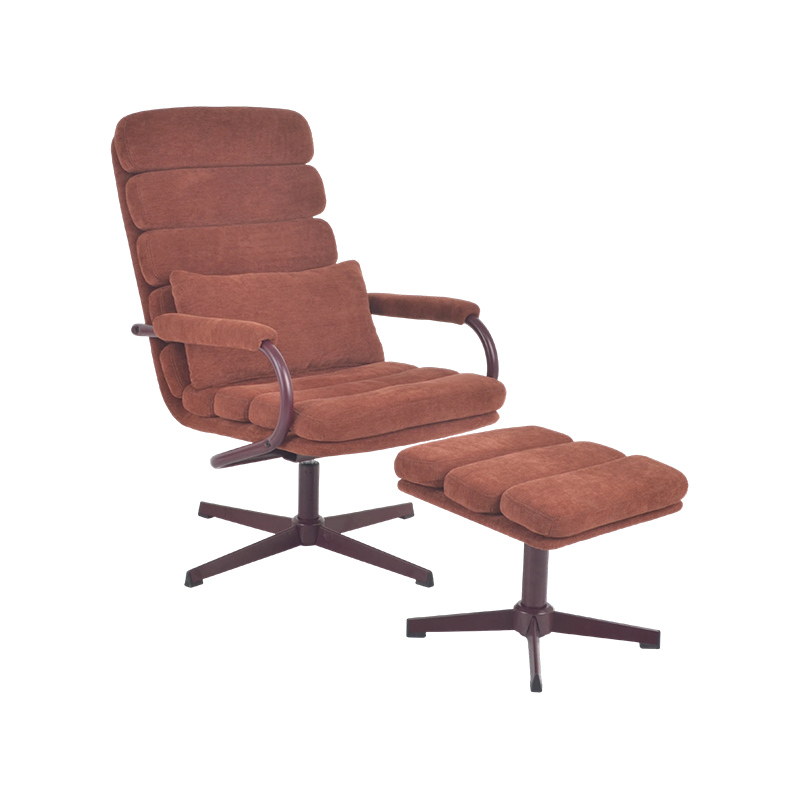
Upholstery Built for Regular Contact and Cleaning
Leisure chairs are touched, sat on, and leaned against constantly, which makes upholstery performance as important as its appearance. Skin-friendly, wear-resistant fabric or leather-alternative materials hold up to repeated contact without pilling, cracking, or fading, while a wide color range allows the same chair frame to be adapted to very different interior schemes — from neutral hospitality lobbies to more expressive residential settings.
For buyers managing multiple properties or product lines, having one chair platform available across a broad color range reduces the complexity of maintaining consistent style standards while still meeting the specific aesthetic needs of each space.
Matching Chair Types to the Right Setting
Choosing between lounge, accent, and recliner chairs often comes down to how the space will actually be used rather than appearance alone.
| Chair Type | Best Suited For | Primary Strength |
| Lounge Chair | Living rooms, hotel lobbies, reading nooks | Extended comfort for long sitting periods |
| Accent Chair | Entryways, bedrooms, boutique hospitality spaces | Visual character and design flexibility |
| Recliner Chair | Family rooms, wellness suites, senior living spaces | Adjustable positioning for sustained use |
A well-rounded leisure chair range lets a project team mix and match across all three categories without switching suppliers or reconciling inconsistent quality standards between pieces meant to sit in the same room.
Weight Capacity as a Baseline for Commercial Reliability
Weight capacity is one of the clearest indicators of whether a chair was engineered for genuine daily use or built primarily for appearance. A weight capacity generally reaching 300 lbs signals a frame, foam density, and joinery system built with a margin above typical use conditions, which matters most in hospitality and other high-turnover environments where the chair is not being used by the same person under the same conditions every day.
For procurement teams evaluating multiple suppliers, weight capacity is a useful shorthand for comparing structural quality across products that may look similar in photographs but differ significantly in how they are actually built underneath the upholstery.
Sourcing Leisure Chairs for Multi-Unit Projects
Furniture importers, hotel and hospitality procurement teams, and interior fit-out suppliers typically evaluate leisure chairs differently than a single residential buyer would. Consistency across large orders, availability of matching pieces across categories, and the ability to source replacement cushions or components later in the product's life cycle all become important considerations once volume increases.
- Confirm foam density and frame material are consistent across production batches, not just in the sample unit
- Check whether removable cushion covers are offered as a standard or optional feature on each model
- Request weight capacity documentation for any chairs intended for high-traffic commercial use
- Verify the color and fabric range available at the order quantities required for the project
A leisure chair range built around these fundamentals — consistent foam, durable frames, maintainable upholstery, and a genuine weight capacity margin — gives buyers a dependable foundation to furnish spaces that need to look good and hold up under real, ongoing use.
Featured Products
Explore Our Featured Products

Featured News

- Mobile
- Contact Us
-
-
+86-139 0582 1355

-
alan@haoguofurniture.com

-
Approximately 210 meters south of the intersection of Le San Road and Sanwanqiao Road in Anji County, Huzhou City, Zhejiang Province, China

-
Copyright ©
Zhejiang HAOGUO Furniture Co., Ltd.
Rights Reserved.
 Office Chair Manufacturers
Dining Chair Manufacturers
Office Chair Manufacturers
Dining Chair Manufacturers
