


 English
 Español
 عربى
CertiPUR-US Certified Polyurethane Foam: What It Means for Office Chairs and Sofas
CertiPUR-US Certified Polyurethane Foam: What It Means for Office Chairs and Sofas
CertiPUR-US Certified Polyurethane Foam: What It Means for Office Chairs and Sofas
CertiPUR-US Certified Polyurethane Foam: What It Means for Office Chairs and Sofas
CertiPUR-US Certified Polyurethane Foam: What It Means for Office Chairs and Sofas
CertiPUR-US Certified Polyurethane Foam: What It Means for Office Chairs and Sofas
CertiPUR-US Certified Polyurethane Foam: What It Means for Office Chairs and Sofas
CertiPUR-US Certified Polyurethane Foam: What It Means for Office Chairs and Sofas
CertiPUR-US Certified Polyurethane Foam: What It Means for Office Chairs and Sofas
CertiPUR-US Certified Polyurethane Foam: What It Means for Office Chairs and Sofas
CertiPUR-US Certified Polyurethane Foam: What It Means for Office Chairs and Sofas
CertiPUR-US Certified Polyurethane Foam: What It Means for Office Chairs and Sofas
CertiPUR-US Certified Polyurethane Foam: What It Means for Office Chairs and Sofas
CertiPUR-US Certified Polyurethane Foam: What It Means for Office Chairs and Sofas
CertiPUR-US Certified Polyurethane Foam: What It Means for Office Chairs and Sofas
CertiPUR-US Certified Polyurethane Foam: What It Means for Office Chairs and Sofas

Product Category
NEW Category
Contact us
CertiPUR-US Certified Polyurethane Foam: What It Means for Office Chairs and Sofas
Content
- 1 What CertiPUR-US Certified Polyurethane Foam Actually Means
- 2 What the Label Actually Tests
- 3 The Standard at a Glance
- 4 Why Foam Quality Shows Up Later Than You Think
- 5 How to Check a Claim Without a Laboratory
- 6 How We Handle Foam on Our Side of the Order
- 7 Matching the Foam Grade to the Product
- 8 Questions Buyers Ask Us
Ask most buyers what they check first on an office chair and you will hear about the mechanism, the gas lift, maybe the mesh. The foam almost never comes up. Yet foam is the part of the chair that stays in contact with the body all day — the seat cushion, the back pad, sometimes the armrest tops — and it is also the component where material quality is easiest to hide and hardest to inspect from a photo.
That is why third-party foam certification has quietly become a purchasing tool rather than a marketing badge. CertiPUR-US certified polyurethane foam is the standard that comes up most often in conversations with North American and European buyers, and it is worth knowing exactly what it does, and does not, tell you about the chair you are about to order.
What CertiPUR-US Certified Polyurethane Foam Actually Means
CertiPUR-US is a voluntary testing and certification program for flexible polyurethane foam. It is administered by the Alliance for Flexible Polyurethane Foam, a US-based nonprofit organization, and it has been running since 2008. The foam inside mattresses, upholstered furniture, pillows and, yes, office seating is the material it covers.
Three details matter more than the logo itself. First, the testing is done by independent, accredited laboratories rather than by the foam producer's own quality department. Second, the certification is tied to a specific foam formulation made at a specific plant, not to a brand or a finished product. Third, it has to be maintained — certified foams are re-tested on an annual basis, so a certificate from eight years ago is not a current certificate.
In practice, this means the claim "CertiPUR-US certified polyurethane foam" describes the material that went into your cushion. It says nothing about the frame, the fabric, the adhesive or the packaging, and it is not a statement that the finished chair is certified.
What the Label Actually Tests
The program looks at three separate questions: what goes into the foam, what comes out of it, and how well it holds up.
- Material content. Certified foam is made without ozone depleters, without PBDE and TDCPP flame retardants, without formaldehyde, without phthalates regulated by the US Consumer Product Safety Commission, and without mercury, lead, cadmium or other heavy metals.
- Emissions. Volatile organic compound emissions are measured in an environmental chamber and must stay at or below 0.5 parts per million by volume, a threshold set with indoor air quality in mind.
- Durability and performance. Foam has to demonstrate that it resists compression set and keeps its support after simulated use, which is the part most relevant to anyone who has ever sat through the sag in a cheap chair.
- Biobased content. Foams formulated with at least 25 percent biobased content can carry an additional designation on top of the base certification.
It is equally important to understand what the label is not. It is not an organic claim, it is not a biodegradability claim, and it does not cover natural or synthetic latex — latex has its own standard. It is a focused material standard, and treating it as anything broader tends to confuse procurement conversations.
The Standard at a Glance
| Test area | What is verified | Why it matters in an office chair |
|---|---|---|
| Material content | No ozone depleters, no PBDE or TDCPP flame retardants, no formaldehyde, no regulated phthalates, no mercury, lead or other heavy metals | Seating that touches the body for eight hours a day should not bring restricted substances along with it |
| Emissions | VOC emissions of 0.5 ppm or less, measured in an environmental chamber | Smaller contribution to the air quality of closed meeting rooms and open-plan floors |
| Durability | Resistance to compression set and retention of support after simulated use | Cushions that still behave like cushions after years of daily shifts |
| Scope | The foam formulation at the producing plant | The frame, upholstery, adhesives and packaging are addressed by other standards |
Why Foam Quality Shows Up Later Than You Think
A chair is usually judged in the first thirty seconds of a showroom visit. Foam quality is judged in month eighteen, when a task chair starts to feel like a plastic shell with a towel over it. Low-density foam compresses, loses resilience and stops distributing pressure, and the user experiences it as fatigue rather than as a material failure. Nobody files a warranty claim saying "the foam lost its loft" — they just stop liking the chair.
Indoor air is the second, quieter issue. Office buildings concentrate people and furniture in relatively small volumes, and foam is one of the largest surfaces in the room. A low-emission cushion contributes a small fraction of the total VOC load, but specification teams in education, healthcare and public procurement increasingly ask for certified material as one line item in a broader indoor air quality plan. It is a modest, verifiable improvement — which is exactly what a purchasing specification should be.
How to Check a Claim Without a Laboratory
Certification claims are easy to make and reasonably easy to verify, if you know what to ask for.
- Request the certificate from the foam producer, not from the furniture factory, and check that it names the foam grade used in your model.
- Confirm the producing plant is listed in the program's public directory; the listing should match the supplier named on the certificate.
- Compare grades. An office chair can use a dense, firm seat foam and a softer back foam, and the two may carry separate certificates.
- Check the date. Certification is maintained through annual retesting, so an outdated document deserves a follow-up question.
- Be wary of vague wording. Phrases such as "certified foam" or "US-tested foam" without a program name tell you nothing; the official mark is written CertiPUR-US®.
None of this requires a lab. It requires a supplier who knows their own bill of materials and can point to the document that proves it.
How We Handle Foam on Our Side of the Order
At Zhejiang Haoguo Furniture, foam specification is settled at the sampling stage, not at the shipping date. Our factory in Zhejiang covers 68,000 square meters of site and 63,000 square meters of buildings, with more than 260 employees, a technical team of over 20 engineers and 68 product patents behind the seating lines. Capacity runs to about two million units a year, exported to more than 40 countries.
What that scale changes in practice is documentation. When a buyer's specification calls for a certified polyurethane foam grade, our sourcing team works from the foam supplier's formulation and certificate, matches it to the density and firmness the model needs, and keeps the record with the project file. Because certification belongs to the foam producer rather than to us, we are careful to state the claim accurately: certified foam inside the cushion, not a certified chair.
Knock-down construction adds one more consideration. When a chair is compressed into a carton for container shipping, the cushion has to recover fully and evenly on arrival. Resilience is part of what the durability testing is designed to measure, which is one reason we prefer certified grades for long-haul programs rather than treating certification as a cosmetic extra.
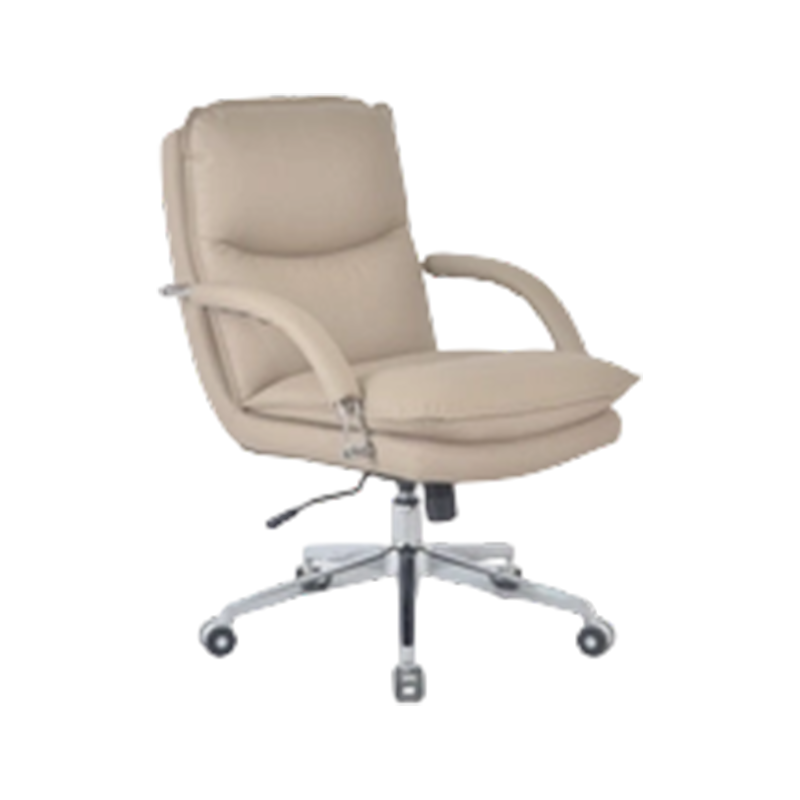 Chrome Frame High-Tech PU Executive ChairIts wide deep seat, PU/PVC upholstery and chrome base and castors suit formal executive offices and long sitting.View Product →
You can see how the material decisions come together on the factory page, where the production lines and quality stations are documented.
Matching the Foam Grade to the Product
Office and executive chairs
Task seating lives or dies on the seat foam. High-back ergonomic models typically need a firmer, denser seat that resists bottoming out over a full shift, paired with a softer back pad that supports rather than pushes. Leather and PU upholstery transmit pressure differently from fabric, so the same foam grade can feel quite different under a PU executive chair than under a woven mesh-back model.
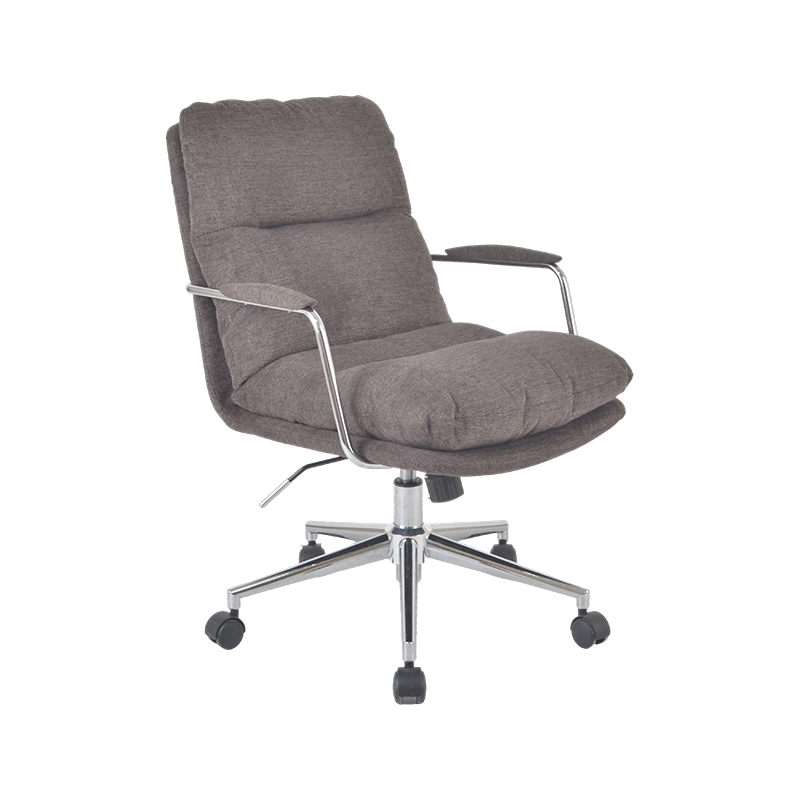 Custom High-Back Ergonomic Fabric Office ChairIts padded high-back, breathable charcoal polyester fabric and segmented lumbar support make it suited to long work or study sessions.View Product →
Sofas and modular seating
Lounge and reception seating is judged over longer, less structured sessions, and modules need to hold their shape when they are pushed together and pulled apart daily. Compressible and modular formats place a premium on foam that returns to its original height quickly.
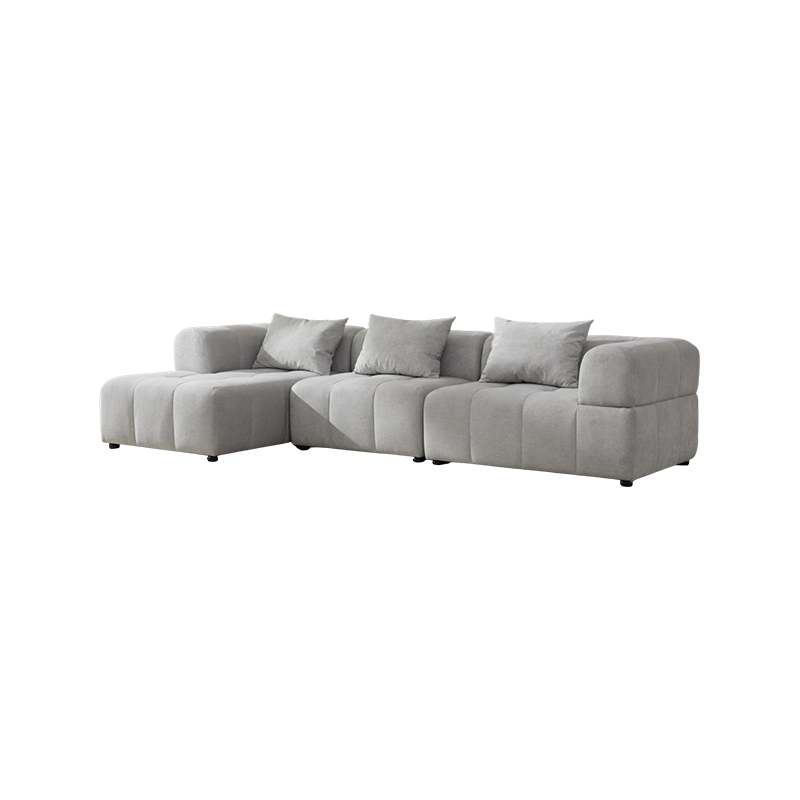 CENTAURI Modular Sofa with High-Density FoamIts three combinable modules, high-density foam and durable polyester fabric support flexible living room layouts and daily family use.View Product →
Gaming and leisure chairs
Gaming chairs and recliners use deeper, softer cushioning, which makes density more important, not less. A soft seat built on low-density foam feels excellent in a showroom and disappointing within a year.
Questions Buyers Ask Us
Is certified foam safer for people with chemical sensitivities?
It is a low-emission material standard, not a medical guarantee. It limits restricted content and caps VOC emissions, which is a meaningful reduction, but new furniture still benefits from ventilation before a space is occupied.
Is it the same as memory foam?
No. Memory foam is a type of polyurethane foam, and a memory foam grade can be certified, but the certification describes content, emissions and durability rather than the slow-recovery feel.
Is certification legally required?
Generally no. It is voluntary, but it is frequently written into retail programs, public tenders and indoor air quality specifications, and some regional rules on flame retardants in upholstered furniture overlap with what the program already screens out.
Does it make a chair more expensive?
It can add a small amount to the material cost, and density usually has a larger effect on price than certification does. In our experience the conversation is more often about whether the seat foam is dense enough for an eight-hour specification than about the label itself.
If you are putting together a specification and need to know which foam grades, densities and certifications we can work with on a given model, send the details through our contact page and our team will come back with material options and samples rather than a brochure.
PREV:No previous article
NEXT:Dallas Furniture Market Guide: Showrooms, Buying Seasons, and Smart Sourcing
NEXT:Dallas Furniture Market Guide: Showrooms, Buying Seasons, and Smart Sourcing
Featured Products
Explore Our Featured Products
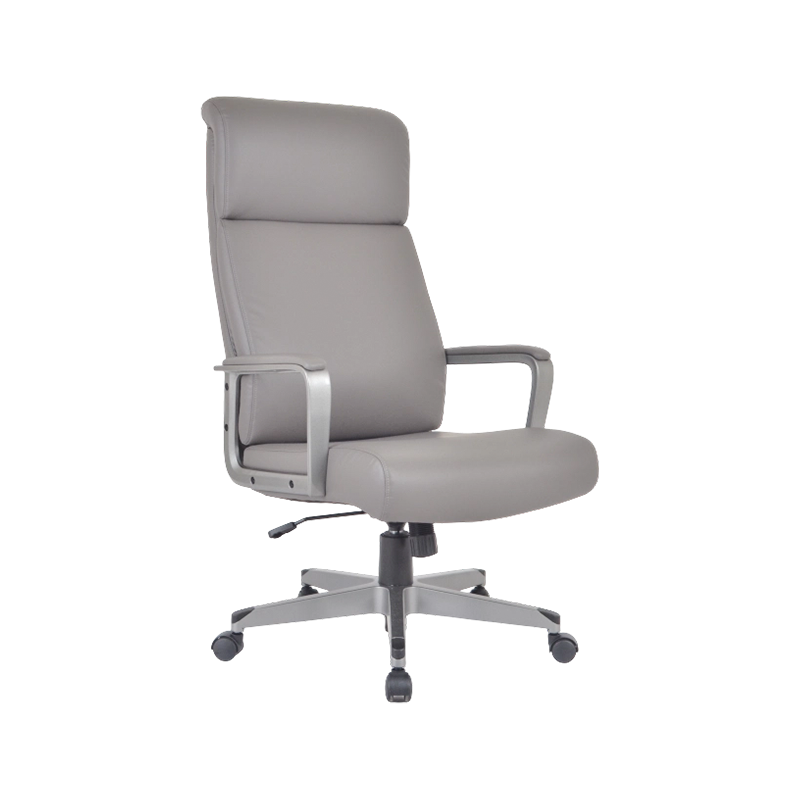



Featured News

- Mobile
- Contact Us
-
-
+86-139 0582 1355

-
alan@haoguofurniture.com

-
Approximately 210 meters south of the intersection of Le San Road and Sanwanqiao Road in Anji County, Huzhou City, Zhejiang Province, China

-
Copyright ©
Zhejiang HAOGUO Furniture Co., Ltd.
Rights Reserved.
 Office Chair Manufacturers
Dining Chair Manufacturers
