


 English
 Español
 عربى
Formaldehyde in Furniture: What Buyers Should Know Before They Specify
Formaldehyde in Furniture: What Buyers Should Know Before They Specify
Formaldehyde in Furniture: What Buyers Should Know Before They Specify
Formaldehyde in Furniture: What Buyers Should Know Before They Specify
Formaldehyde in Furniture: What Buyers Should Know Before They Specify
Formaldehyde in Furniture: What Buyers Should Know Before They Specify
Formaldehyde in Furniture: What Buyers Should Know Before They Specify
Formaldehyde in Furniture: What Buyers Should Know Before They Specify
Formaldehyde in Furniture: What Buyers Should Know Before They Specify
Formaldehyde in Furniture: What Buyers Should Know Before They Specify
Formaldehyde in Furniture: What Buyers Should Know Before They Specify
Formaldehyde in Furniture: What Buyers Should Know Before They Specify
Formaldehyde in Furniture: What Buyers Should Know Before They Specify
Formaldehyde in Furniture: What Buyers Should Know Before They Specify
Formaldehyde in Furniture: What Buyers Should Know Before They Specify
Formaldehyde in Furniture: What Buyers Should Know Before They Specify

Product Category
NEW Category
Contact us
Formaldehyde in Furniture: What Buyers Should Know Before They Specify
Content
- 1 Formaldehyde in furniture: what it is and why it is used
- 2 Where formaldehyde hides in office and home furniture
- 3 How much is too much? Health and exposure
- 4 The standards and certifications that matter
- 5 How to reduce formaldehyde exposure at home or office
- 6 What to ask a furniture supplier
- 7 A manufacturer's view: designing for lower emissions
- 8 Questions we hear from buyers
Walk into a furniture showroom and you will often notice a distinct smell: glue, foam, fabric, and finish mingling in the air. It is tempting to call it "new furniture smell" and move on. For buyers, facility managers, and families, however, that smell raises a fair question: how much formaldehyde is in this furniture, and should we be concerned? We have manufactured office chairs, sofas, and seating at HAOGUO since 2007, and we have answered that question in markets from Europe to the Middle East. The honest answer is that formaldehyde is common in furniture, but risk is not inevitable. Material choice, manufacturing discipline, and ventilation all matter.
Formaldehyde in furniture: what it is and why it is used
Formaldehyde is a simple organic compound, a colorless gas with a sharp odor. In furniture it is rarely added as a liquid. It is a building block in adhesives and resins, especially urea-formaldehyde, phenol-formaldehyde, and melamine-urea-formaldehyde. These resins bond wood fibers, add moisture resistance, and help composite panels hold their shape. That is why engineered wood appears in chair seat pans, backrests, sofa frames, tabletops, and cabinet carcasses.
The same chemistry can appear in textiles and finishes. Easy-care, stain-resistant, and durable-press fabric treatments may release small amounts of formaldehyde. Foam, upholstery adhesives, and some lacquers can contribute as well. Emissions are usually highest when a product is new and decline over time. Heat and humidity accelerate the release, which is why a closed, warm room can feel more intense than a well-ventilated showroom.
Where formaldehyde hides in office and home furniture
It helps to think in layers. In an office chair, the visible fabric is only the outer surface. The seat frame may be plywood, the foam may be molded, the back shell may be plastic or composite, and the adhesive that holds the upholstery together may also contribute. A sofa or lounge chair adds more foam, more fabric, and more surface area.
- Engineered wood: particleboard, MDF, and plywood in seat frames, backrests, sofa frames, drawer boxes, and laminates.
- Adhesives and glues: assembly glues, upholstery lamination, and edge banding.
- Foam and padding: polyurethane foam, bonded foam, and some fire-retardant treatments.
- Textiles and leather: wrinkle-resistant, stain-resistant, and anti-microbial finishes, plus backings and bonded leather.
- Coatings and laminates: some lacquers, paints, and melamine surfaces.
When we specify a fabric office chair, we ask for material declarations for every layer, not just the cover. That is also the mindset we recommend to buyers: ask what is inside, not only what is visible.
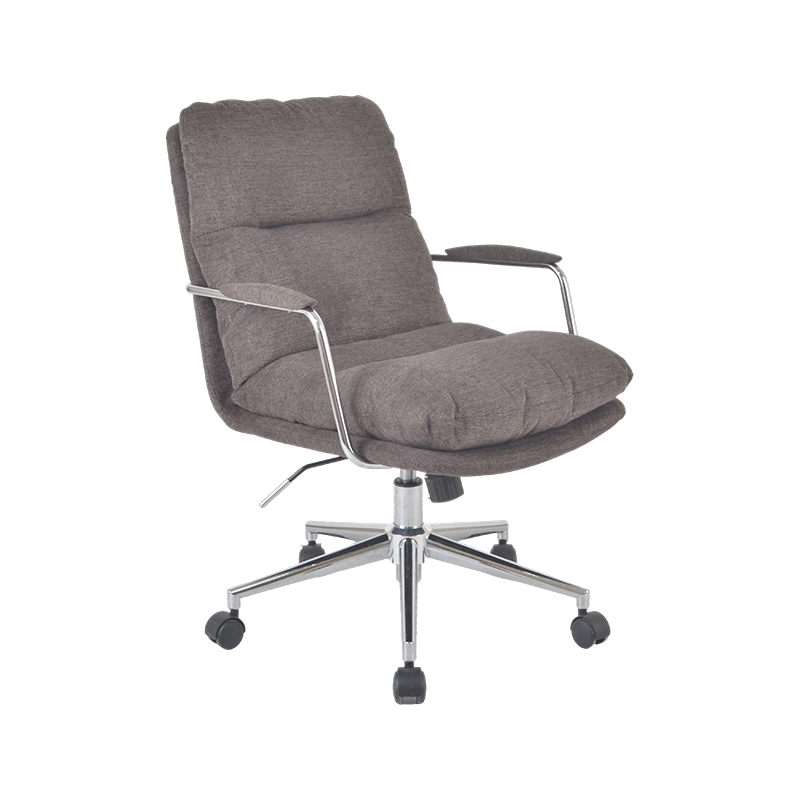 High-Back Ergonomic Fabric Office ChairHigh-back ergonomic fabric office chair with charcoal polyester upholstery, chrome frame, tilt/lock plate and gas lift; useful when checking layered material details.View Product →
Products such as our high-back ergonomic fabric office chair are built around this layered approach, and the same questions apply to sofas, dining chairs, and home office seating.
How much is too much? Health and exposure
Formaldehyde is a known irritant. Short-term exposure can cause eye, nose, and throat irritation, coughing, headaches, and skin reactions. People with asthma may find symptoms worsen. International cancer agencies classify formaldehyde as a human carcinogen, linked to nasopharyngeal cancer and leukemia at high or prolonged occupational exposure. That does not mean every new chair is dangerous. It means dose, duration, and ventilation matter.
Sensitive groups deserve extra care: children, pregnant people, older adults, and anyone with respiratory conditions. Odor is not a reliable measuring tool. Some people smell formaldehyde at low levels; others do not. If you suspect a problem in a new office or home, professional air testing is more useful than a consumer kit, and it should be done before occupancy when possible.
The standards and certifications that matter
Furniture emissions are regulated in many major markets, but labels are not always comparable. The table below is a practical starting point for a sourcing conversation.
| Standard or programme | Market | What it addresses | What to request |
|---|---|---|---|
| CARB Phase II and TSCA Title VI | United States | Formaldehyde emissions from composite wood products | Mill test reports or finished-product test data |
| EU E1 | European Union | Low-emission wood-based panels | E1 declaration and test method |
| E0 | Some Asian and European markets | A stricter voluntary panel grade | The exact definition and a current test report |
| NAF and ULEF | North America and global sourcing | No-added-formaldehyde or ultra-low-emission resins | Resin declaration and third-party certification |
| GREENGUARD Gold | International | Low VOC emissions from finished furniture | Current certificate and product scope |
| OEKO-TEX Standard 100 | International textiles | Restricted substances in fabrics and accessories | Certificate for the specific fabric code |
Two cautions are worth repeating. First, E0 is not one universal standard; definitions vary. Second, a panel certificate does not automatically cover the finished chair, sofa, or table. Ask for finished-product data and make sure the certificate matches the exact model and material.
How to reduce formaldehyde exposure at home or office
- Ventilate before and after delivery. Open windows, use fans, and keep air moving for the first days and weeks. If possible, let new furniture air out in a garage or covered outdoor area before installation.
- Ask for low-emission documentation. Look for CARB Phase II or TSCA Title VI compliance, E1 panels, NAF or ULEF resins, and GREENGUARD Gold where relevant.
- Choose fewer composite layers where practical. Solid wood, metal, glass, and powder-coated steel can reduce one source, but upholstery, foam, and finishes still need scrutiny.
- Control heat and humidity. Hot, humid rooms release more formaldehyde. Do not try to "bake out" a home or office; overheating can raise levels and is not a reliable fix.
- Clean removable textiles carefully. Wash curtains, removable covers, and other fabrics according to care labels. Not every furniture cover is removable, so check before you buy.
- Do not rely on air purifiers alone. Some filters capture particles, but gaseous formaldehyde is not reliably removed by every unit. Ventilation remains the most practical first step.
If occupants report persistent irritation, headaches, or respiratory symptoms after a fit-out, take the complaint seriously. Increase ventilation, identify new materials, and consider professional testing before adding more furniture.
What to ask a furniture supplier
A good supplier should be able to explain what is in the product without hiding behind a single label. These questions work for office chairs, sofas, dining chairs, and casegoods:
- Which composite wood components are in this product, and what resin system is used?
- Can you share CARB Phase II, TSCA Title VI, or E1 test reports for the finished product, not just the panel?
- Is the product NAF or ULEF, and which third-party certificate covers it?
- What finishes, adhesives, and fabric treatments are used?
- How should the furniture be aired out before a space is occupied?
- Are material declarations or replacement parts available for future orders?
If a supplier cannot answer, the burden of proof shifts to you. That is not a reason to walk away immediately, but it is a reason to test, ventilate, and document.
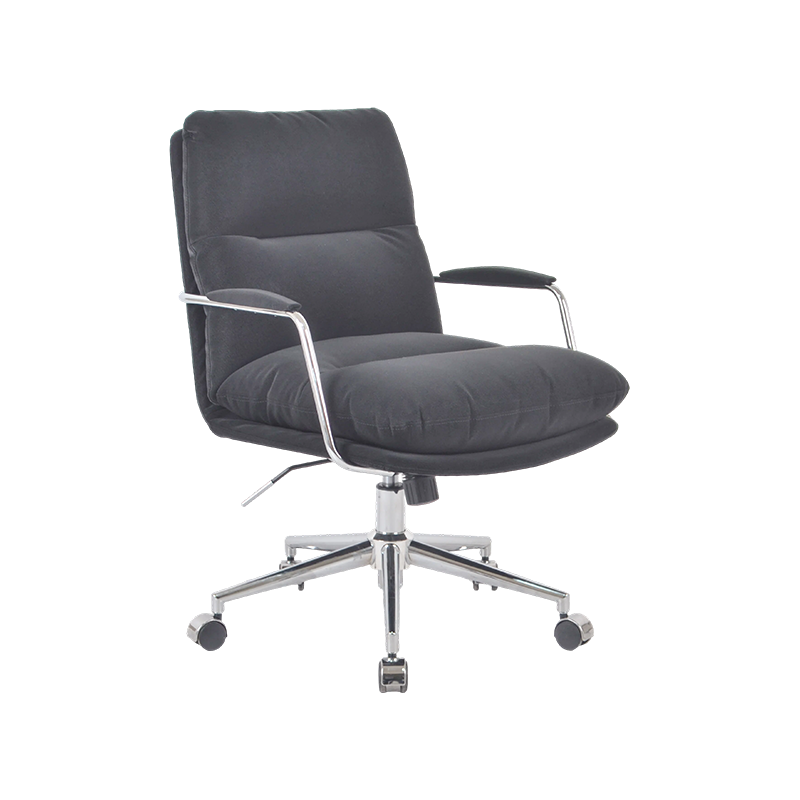 HG-1173 Stylish Home Office ChairCompact home office chair with double-layered high-density sponge, padded chrome arms, tilt mechanism and BIFMA-tested construction for specification checks.View Product →
For compact home office programmes, a chair such as our stylish home office chair shows how these questions apply to a real specification.
A manufacturer's view: designing for lower emissions
At HAOGUO, formaldehyde control starts before production. We work with panel, foam, and fabric suppliers who provide material declarations, and we specify low-formaldehyde adhesives and finishes where the application allows. Our factory in Zhejiang covers 68,000 square meters, employs more than 260 people, and has an annual capacity of 2 million pieces. We hold 68 product patents and export to more than 40 countries. That scale does not make us complacent; it makes traceability essential.
We also remind customers that no certificate replaces good ventilation and sensible specification. A chair can be compliant and still smell new. A sofa can use low-emission foam and still need time to air out. The goal is not a perfect label. The goal is a product that performs well, documents its materials honestly, and fits the way the space will be used.
 Breathable Mesh-Back Fabric Seat Task ChairBreathable mesh-back task chair with fabric seat, adjustable arm height and 11.5 kg frame; relevant where ventilation and daily comfort guide specification.View Product →
Our breathable mesh-back task chair is one example of how these principles come together in a finished product. You can learn more about our factory and company background if you are evaluating a manufacturing partner.
Questions we hear from buyers
Does all furniture contain formaldehyde?
No. Solid wood, metal, glass, and some plastics can be formaldehyde-free, but many finished products still contain trace amounts from adhesives, coatings, or textiles. "Formaldehyde-free" claims should be specific and supported by test data.
Is the new furniture smell always formaldehyde?
Not necessarily. VOCs from finishes, foam, and fabric also contribute. Formaldehyde has a sharp, pungent odor, but smell is not a reliable measurement.
How long does off-gassing last?
Emissions are usually highest in the first days and weeks and decline over months. Some products continue to emit low levels for longer. Heat and humidity affect the rate.
Is solid wood always safer?
Solid wood itself may be low-risk, but glues, finishes, and upholstery can still contribute. Look at the whole product, not just the frame.
Can I remove formaldehyde from furniture?
You can reduce exposure through ventilation, washing removable textiles, and time. You cannot reliably seal in all emissions, and DIY treatments with unknown safety profiles are not recommended.
Formaldehyde in furniture is not a reason to avoid manufactured furniture altogether. It is a reason to ask better questions, specify materials with evidence, and plan for ventilation before a new office or home is occupied. The "new furniture smell" should not be ignored, but it should not be demonized either. If you are sourcing office seating, sofas, or dining chairs, we are happy to share what we have learned and help you compare options with confidence.
PREV:No previous article
NEXT:CertiPUR-US Certified Polyurethane Foam: What It Means for Office Chairs and Sofas
Featured Products
Explore Our Featured Products
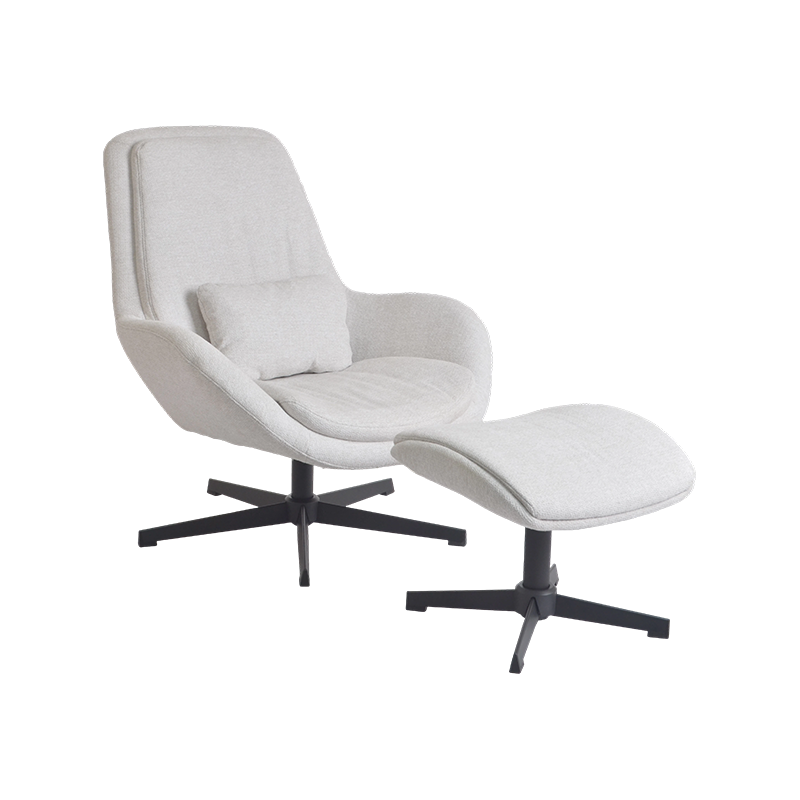

Featured News

- Mobile
- Contact Us
-
-
+86-139 0582 1355

-
alan@haoguofurniture.com

-
Approximately 210 meters south of the intersection of Le San Road and Sanwanqiao Road in Anji County, Huzhou City, Zhejiang Province, China

-
Copyright ©
Zhejiang HAOGUO Furniture Co., Ltd.
Rights Reserved.
 Office Chair Manufacturers
Dining Chair Manufacturers
